By Joanna Nicolas

Picture this...
The year is 1919, in the charming town of Leduc, Alberta, where the sweetness of May fills the air with fragrant blooms and the promise of new beginnings. A young couple, just five months into their union, walks through the woods, eager to visit a neighbouring farm. Peace surrounds their walk, until abruptly, the tranquility is shattered by a deafening bang. The woman feels a jolt of pain which pierces her mind, and in an instant, she collapses to ground, darkness swallowing her whole. When she awakens, she finds herself alone, her heart racing with fear and confusion as she crawls to the nearby farm to seek help. Upon her arrival, the residents' rush her to an Edmonton hospital, where the uncertainty of her fate hangs heavy in the air.
Photo by Fabian Kleiser on Unsplash
A True Story!
On or around May 26, 1919, in Leduc, AB, a man shot his wife, intending to end her life. His name was John Musa, a member of the Canadian Expeditionary Forces in the Edmonton District. Following his trial in Edmonton, AB, on June 26, 1919, Musa was sentenced to only 4 years in the Edmonton prison for his attempt on Marguerite Clemence Musa’s life.
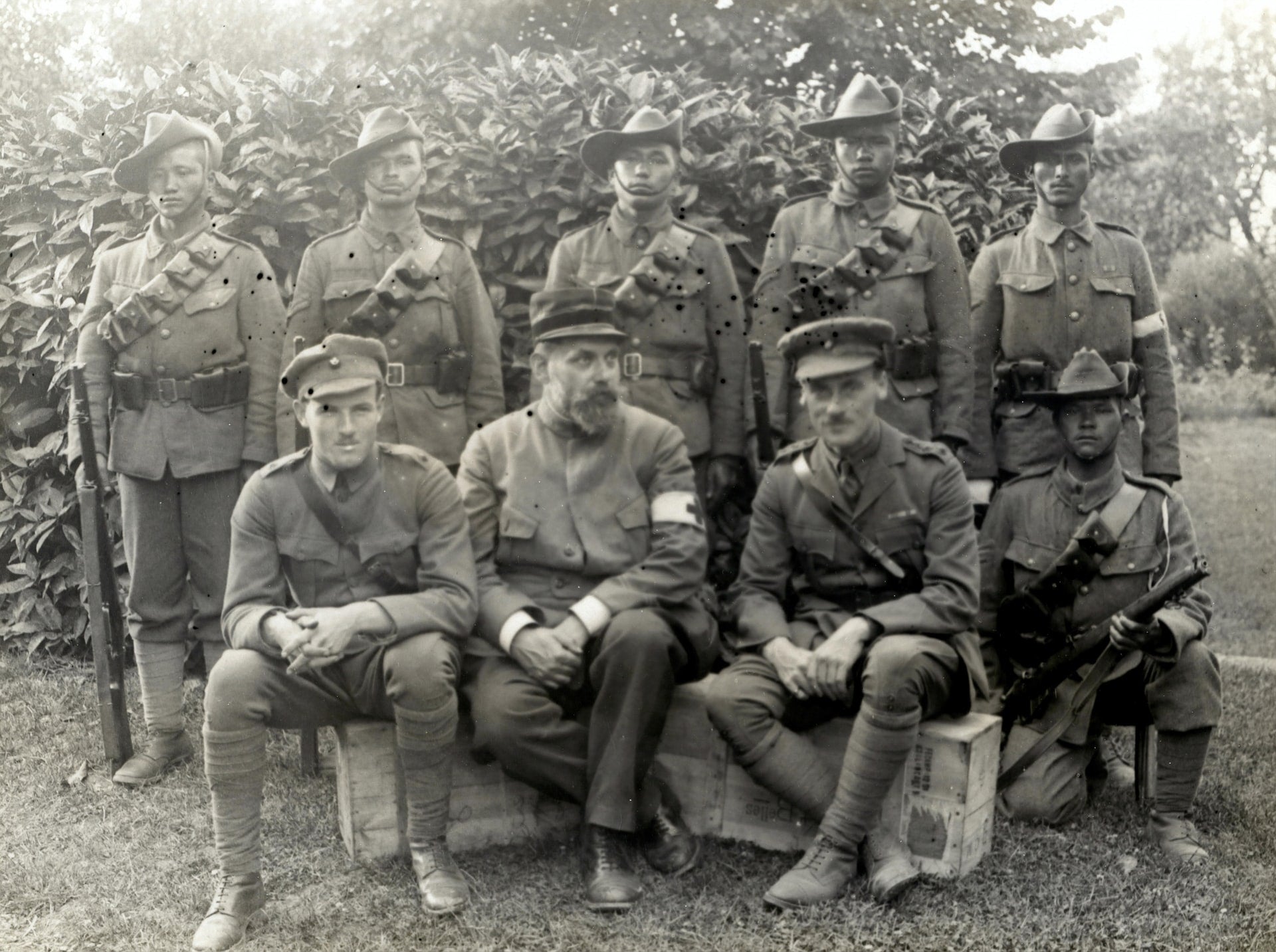
Soldiers often faced trauma through wars and battles; something contemporary artists consistently explore.
Various books and movies manifest this neurological disorder as flashbacks and nightmares, frequently never exceeding that. However, alongside these tropes, violent reactions also follow. The question now becomes how true this narrative is to real life. Are there any connections (or lack thereof) between Musa’s military background and his attempted murder of his wife? Or was his attempted homicide done in a completely sane mind – or at least, as sane as a murderer can be?
Historically, thousands of soldiers were treated for a condition which encompassed a variety of physical and psychological symptoms. Regardless of the side soldiers found themselves on, they started to present neurological symptoms in large numbers. These symptoms included dizziness, tremors, paraplegia, tinnitus, amnesia, weakness, headache and mutism of psychosomatic origin. At this time, this condition was known as “shell shock” or “war neurosis.” However, in contemporary medicine, shell shock is considered a type of Post Traumatic Stress Disorder (PTSD) associated with experiences of combat as either military personnel or a civilian in war. For simplicity, I will continue to refer to this neurological condition as “shell shock.”
Photo 24/(100) from the Girdwood Collection held by the British Library. This image is part of the Europeana Collections 1914-1918
Musa’s criminal file offers limited information on his military life, primarily through telegrams. While we could go into the nitty gritty and talk about where he was (allegedly) born or his battalion, two points primarily stick out: (1) Musa was diagnosed as a soldier suffering from shell shock, and (2) he was granted permission to marry on February 15, 1919. Following along with his case file, assuming he married his wife when he was granted permission, the couple was only married for approximately five months.
Five months! That was all it took for him to attempt to murder his newly-wed wife.
Mrs. Musa’s deposition explains the scene of the crime from her perspective:
"…the accused told me that we would go and see a farm, and told me to walk ahead. We only walked a little while when as we got towards some woods, and whilst in the woods the accused shot me in the back of the neck head. I fell and became unconscious. After a while I regained consciousness. And crawled along on the ground to a farm and some people brought me to Edmonton."
Marguerite Clemence Musa's deposition (witness statement)
Clearly, John Musa did intend to kill his wife, but why? His statement in court leaves this a mystery.
“I have nothing to say,” Musa says, “I do not remember nothing.”
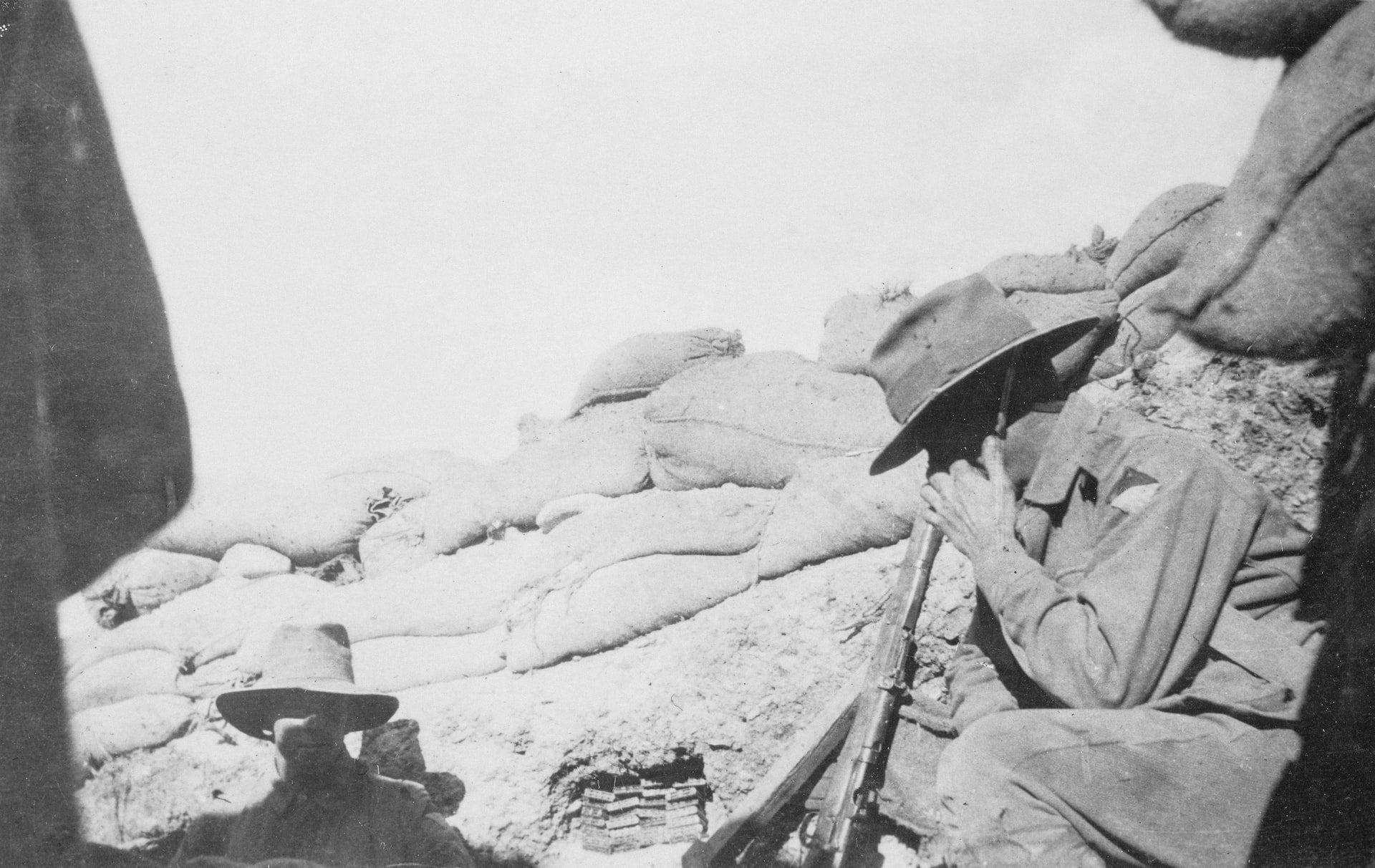
Does Musa truly remember nothing about his attempt to kill Marguerite?
Perhaps his shell shock makes him an unreliable narrator of his story – after all, one symptom of shell shock is confusion and amnesia. What if Musa was genuinely confused at the moment he tried to murder his wife? What if he genuinely remembered nothing of his attack?
Photo from the photograph album of Major J.M. Rose on Unsplash
What does Musa's criminal file tell us about his crime?
When/where the crime occurred...
Sometime around May 26, 1919 in Leduc, AB.
When/where the trial occurred...
Musa was tried on June 26, 1919 in the Supreme Court of Canada Edmonton Judicial District.
The witnesses of the crime...
Nine witnesses in total testified, many of whom were the doctors that performed surgery on Mrs. Musa and Mrs. Musa herself.
The charge pleaded and recieved....
Accused pleaded NOT GUILTY... but was found guilty.
The sentence received...
Sentenced to ONLY four years in the Edmonton prison.
And... um...
Surely there's... something more that can be gathered from this 21-paged criminal case file.

The case goes beyond the case file...
John Musa's Provincial Archives of Canada case file leaves much to be desired. What were his motivations in attempting to kill Marguerite Clemence Musa? Was he given a light sentence because of his soldier status?
Shell shock was not well understood at the time of Musa’s case. The term was only coined in 1915 to describe soldiers’ experience during the war, but it would take many more years before PTSD was officially recognized. In this case, while the telegrams prove a diagnosis of shell shock for Musa, the court never seems to reference his condition directly.
While connections to shell shock are a possible reason for Musa’s crime, there is not enough evidence to strongly support the claim. However, in the same breath, there is not enough evidence to support that he was completely sane. As far as the court is concerned, the crime happened, but the criminal’s motivations are lost in history.
Musa’s criminal motivations are now up to our interpretation, leaving room to fantasize about the past. Maybe John Musa wanted a quick out of his marriage and thought murder was the most straightforward fix; perhaps he was in a manic episode and saw his wife in the woods as a threat.
Photo by Jon Tyson on Unsplash
We may never truly understand Musa’s motivations through his case file alone... but perhaps there is one lesson we may take away from his crime:
Add comment
Comments