By Amanda Kloster
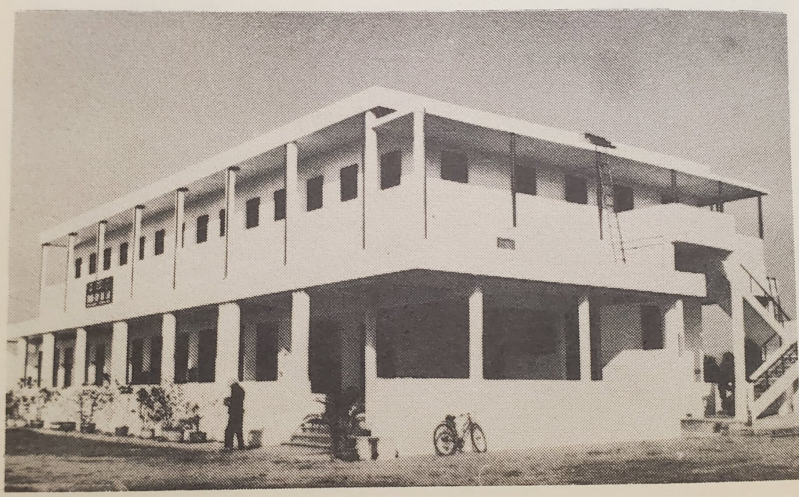
Quang Ngai, South Vietnam, Claire Culhane, Why is Canada in Vietnam?: The Truth About our Foreign Aid. 1967-1968
For my history seminar, I was asked the SIMPLE (as if) task of "analyzing an archival file". After visiting Vietnam in 2013, I jumped at the chance to look for something on the 1960s conflict. I knew that America had been heavily involved, but believed that Canada had no part in it—until I discovered two pages of a letter signed by a Canadian nurse. McMaster University Archives, which hold the personal papers of Claire Culhane, digitized parts of the fonds. Claire Culhane fonds | McMaster University Library. Library assistant Karen Pavão kindly sent me the two missing pages in record time! In a nutshell, Claire's letter urges her compatriots to rise up against Canadian involvement in the war. What? What involvement? I thought this was one war that Canada had not participated in.
So did Claire Culhane!
Working in a Canadian-run hospital that treated tuberculosis patients in Quang Ngai (South Vietnam), Claire ended up experiencing the war first hand. Yet, when she volunteered to take care of ill Vietnamese, she never imagined that her own country was participating in a USA conflict. In her open letter, Claire exposed that her hospital was at the mercy of the Americans. Deeply upset, she spent the next 8 years lobbying to withdraw ALL Canadian presence in Vietnam.
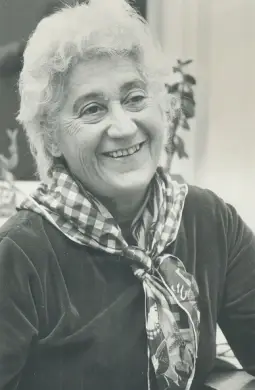
https://johnboyko.com/2021/03/22/the-one-woman-army/
Setting the tone
From the get-go, Claire displays her aversion towards the US government: “The first contradiction following our arrival in Saigon, was to be flown to our duty station in a CIA-operated AIR AMERICA plane.” One senses her frustration to be thrust onto a military plane. By labelling the contradiction, “first”, we know that she will expose more deception. And she sure does!
Selfish Americans
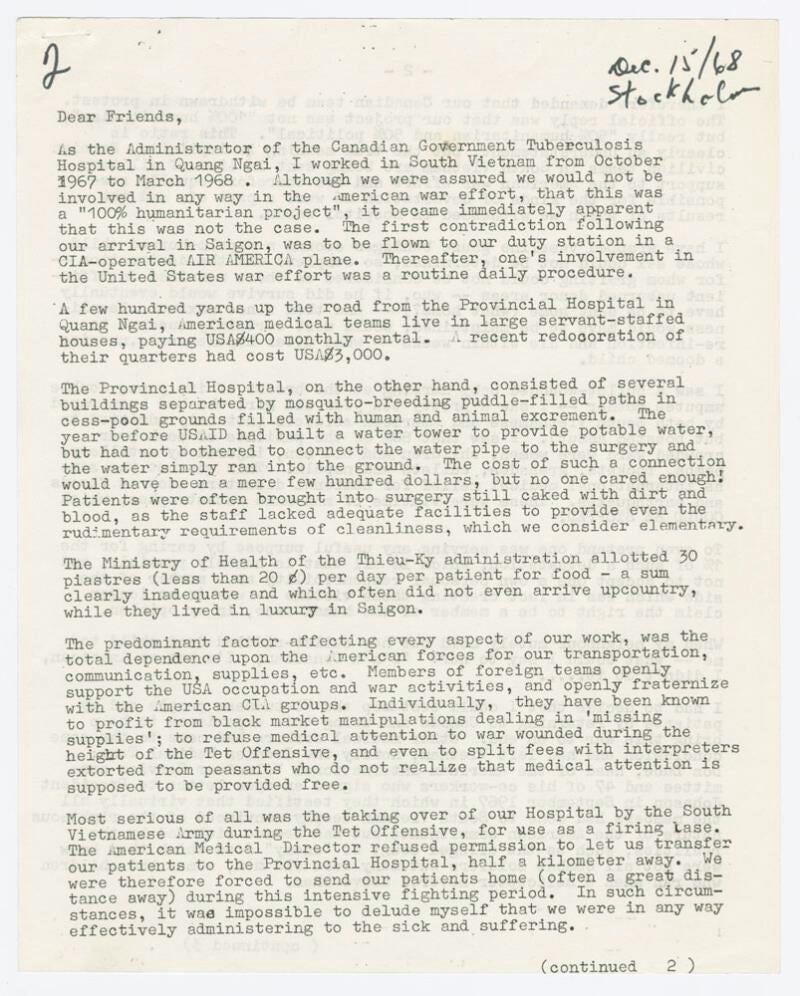
https://digitalcollections.mcmaster.ca/pw20c/culhane-claire-letter-15-december-1968
She liberally attacks everything American. For instance, their medical team lived in large houses that were, she wrote: “servant-staffed”. By the 1960s, the word “servant” was no longer in fashion. Claire uses the terminology to expose just exactly how the Americans were selfishly living in Vietnam.
They were supposed to be there to help the less fortunate, but instead she felt they were living it up. She mentions that the American team spent $3000 redecorating their houses.
The incensed nurse contrasts the lavish expenditure on their living quarters to the poor state of the American Provincial Hospital, which “consisted of several buildings separated by mosquito-breeding puddle-filled paths in cess-pool grounds filled with human and animal excrement.”
She points out that their hospital didn’t even connect their water pipe to their surgery ward and it ran straight into the ground. Claire passionately proclaims: “The cost of such a connection would have been a mere few hundred dollars, but no one cared enough!”
As a nurse, she was extremely concerned that the hospital did not meet “the rudimentary requirements of cleanliness, which we consider elementary.”
Claire encourages readers to see Americans the same way as she saw them: selfish incompetent capitalists.
For Americans, it was never about the people
According to Claire, while the Americans spent precious dollars on their own accommodations, they did not do enough for their patients. “The Ministry of Health of the Thieu-Ky administration allotted 30 piastres (less than 20 ¢) per day per patient for food – a sum clearly inadequate and which often did not even arrive upcountry, while they lived in luxury in Saigon.” Her choice of the word “luxury” showcases how the people in charge were living in a completely different world than the ones suffering.
To make the Americans sound even worse, Claire recalls: “Most serious of all was the taking over of our Hospital by the South Vietnamese Army during the Tet Offensive, for use as a firing base. The American Medical Director refused permission to let us transfer our patients to the Provincial Hospital, half a kilometer away. We were therefore forced to send our patients home (often a great distance away) during this intensive fighting period.” A hospital that refuses to do what is good for patients? How could they? Help was only a short distance away and yet it was apparent that it was not a priority. The medical director had been sent to Vietnam for the same reason as Claire but could care less about doing his job. What a rotten thing to do!
Claire wanted people to realize who was at fault: America. In her letter, she never misses a chance to bombard the Americans: “American war effort,” “United States war effort,” “the USA occupation and war activities,” and “a part of the American front.” She never writes this way about the North Vietnam government or the National Liberation Front. America was the enemy. Claire poured her animosity towards America and made sure that her readers reconsidered who the heroes were.
Humanitarianism. What’s that?
Even within the humanitarian circle in Vietnam, something was amiss. Claire accuses aid groups of corruption.
“Members of foreign teams openly support the USA occupation and war activities, and openly fraternize with the American CIA groups. Individually, they have been known to profit from black market manipulations dealing in ‘missing supplies’; to refuse medical attention to war wounded during the height of the Tet Offensive, and even to split fees with interpreters extorted from peasants who do not realize that medical attention is supposed to be provided free.”
Describing the everyday Vietnamese people as “peasants”, Claire felt that the South Vietnam government and American forces considered themselves kinglike. While they lived in their luxurious castles, they ignored their "subjects." Her choice of words suggests she held a communist ideology. In fact, she had once been part of the Communist Party of Canada.
Foreign medical teams had become “a shield behind which governments are netting enormous profits from sale of war materials to the USA (e.g. Canada makes 500 million dollars annually in this way).” Canada was not looking good in this situation. They were letting themselves be used to help America. Claire wanted her country and others to face reality and what their actions allowed.
Her letter demands that Canadian aid should be removed from Vietnam in protest. She reflects: “The official reply was that our project was not “100% humanitarian”, but really “50% humanitarian and 50% political”. "This ratio is clearly an understatement, but the true meaning is implicit.” Her biographer specified that when she was interviewed by External Aid, Claire had made it clear that she was going over to help a 100% humanitarian project. But after her time in Quang Ngai, she knew it was far from the truth. She had been lied to and that did not sit well with her.
“I saw that 80% of the patients of each overcrowded ward were women, children and old men, injured by artillery, bombs, rockets, grenades, bullets and napalm. This was not the same as international medical relief for national disasters such as floods and earthquakes. These were victims of man-made catastrophes, which COULD BE STOPPED!” Claire did not hide her frustration. 80% of patients should not have been in the hospital, PERIOD. She firmly believed their wounds could have been prevented.
No longer human
“To even pretend one was serving any useful purpose by caring for the 1% of such a devastation, which is all that is humanly possible, and not to accept one’s own personal responsibility as a member of the side which was in fact creating these victims — was to no longer claim the right to be a member of the human race, in my opinion.” Claire stripped Americans of their humanity in her letter. After causing such death and destruction, how were they showing any kind of compassion? They were helping no one. She is unequivocal, America "was in fact creating these victims".
Abandoning patients
Claire condemns anyone who criticized her for leaving the patients:
“I would point out that they are obviously thinking in terms of their own well-arranged, uncomplicated practice – not in terms of the conditions existing in South Vietnam, not of the only type of care possible to offer: – of the unbearably shocking sight of patients lying on floors untended for weeks, partly as a result of the corruption of the authorities who were supposed to be providing us with the means to work.”
How would anyone understand what was happening if they were not there? Claire felt she could not help anyone as the higher-ups were continuously adding more problems to the conflict. The root of the problem had to be dealt with first.
Also, critics would be “ignoring the existence of the well functioning medical programme already being carried out by the National Liberation Front and its own Liberation Red Cross Organization in both liberated and non-liberated areas of South Vietnam.”
The South did have their own medical group working diligently to care for patients of war and common illnesses. Claire was not abandoning anyone.

Quang Ngai, South Vietnam, Claire Culhane, Why is Canada in Vietnam?: The Truth About our Foreign Aid. 1967-1968
Strength in number
The only right thing Claire felt she could do was to return home and protest to bring an end to the war. She concludes her letter by highlighting that other volunteers could no longer support the mission:
“Other medical workers had come to the same conclusion and had left Vietnam, notably the Iranian Medical Team."
One last time before concluding, she takes the opportunity to expose American propaganda:
Don Luce, head of the American International Volunteer Service committee and 47 of his co-workers who signed an open letter to President Johnson in September 1967 in which they testified that virtually all the members had come to South Vietnam deeply convinced of the righteous nature of the American commitments but had become sickened by the realities, such as the alleged count of “enemy” dead which they knew were not all combat soldiers but many were old men, women and children who ran when a helicopter hovered above them.”
A Call to Action
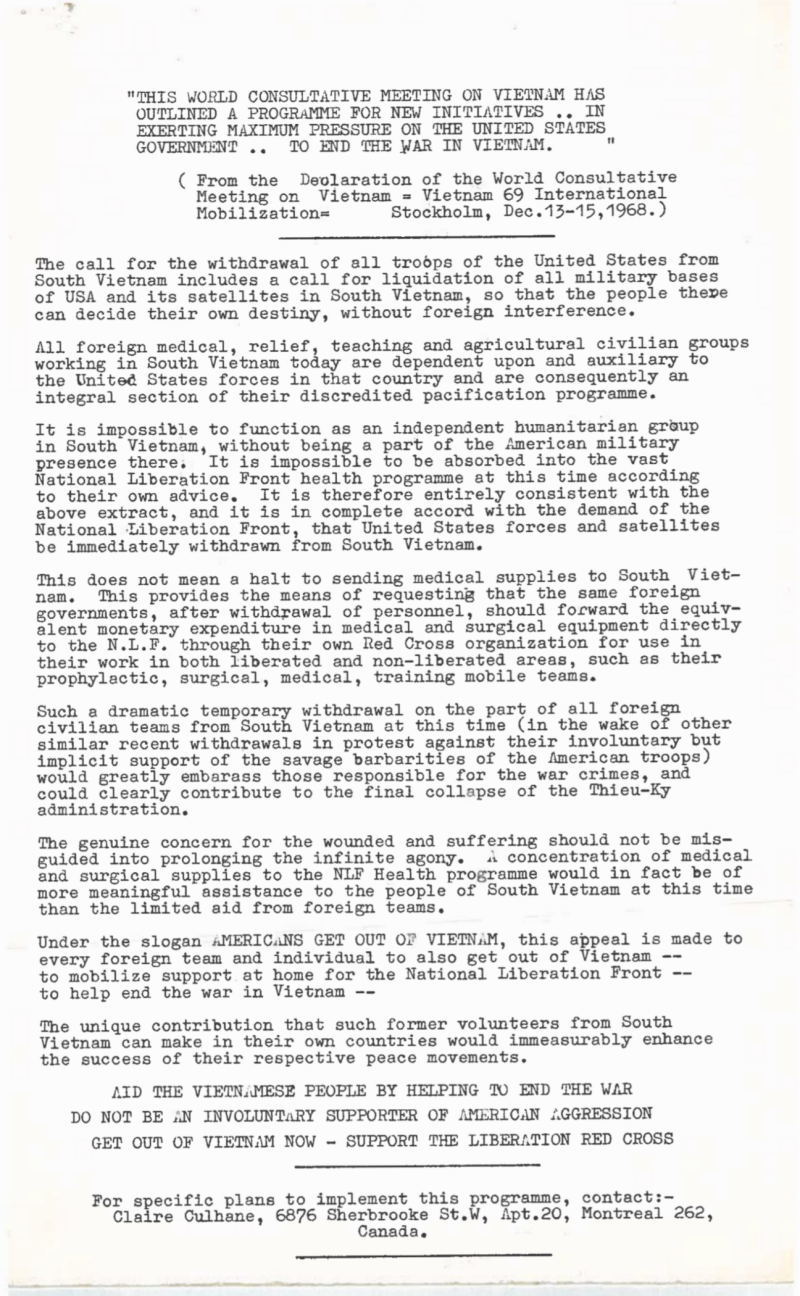
Attached to the passionate anti-war letter, one finds Claire's call to action which she drafted after attending the World Consultative Meeting on Vietnam at Stockholm, Sweden in December 1968. Her 3-page letter provides her personal justification for the withdrawal of Canadian help.
She revealed her communist persuasion when she unequivocally sided with the National Liberation Front. She believed that the best way to support the Vietnamese people was “A concentration of medical and surgical supplies to the NLF Health programme would in fact be of more meaningful assistance to the people of South Vietnam at this time than the limited aid from foreign teams.”
The limited aid as was written in Claire’s letter was full of corruption and manipulation. It was of no help. Instead, aid should be given to those who would properly administer it while the rest of the world joined together in protesting an end to the war.
Conclusion
From her continuous attacks on the Americans, her peculiar choice of words and siding with North Vietnam, Claire's letter pulls much from her communist ideology. After analyzing her letter, I found there was so much to explore but not enough time to do it. I learned that war is a very messy conflict and has many factors to take into consideration. No matter who you think is the "good guy," any side can commit horrendous crimes.
Acknowledgements
I would like to acknowledge Karen Pavão of McMaster University library for quickly sending me the last two pages of the letter.
References
All quotations come from McMaster Archives, Claire Culhane fonds. – 1956-1976.
Primary Sources:
Culhane, Claire, Letter, 15 December 1968. https://digitalcollections.mcmaster.ca/pw20c/culhane-claire-letter-15-december-1968.
Culhane, Claire, Letter, 15 December 1968. https://digitalcollections.mcmaster.ca/pw20c/culhane-claire-letter-15-december-1968-0.
Secondary Sources:
Culhane, Claire. Why is Canada In Vietnam?: The Truth about our Foreign Aid. Toronto: NC Press Ltd, 1972.
McMaster University. "Claire Culhane: Canadian Peace Activist and Humanitarian." Hamilton: McMaster University Library, Digital Collection. https://digitalcollections.mcmaster.ca/pw20c/case-study/claire-culhane-canadian-peace-activist-and-humanitarian.
Lowe, Mick. One Woman Army: The Life of Claire Culhane. Toronto: Macmillan Canada, 1992.
Add comment
Comments